Currently Empty: R0.00

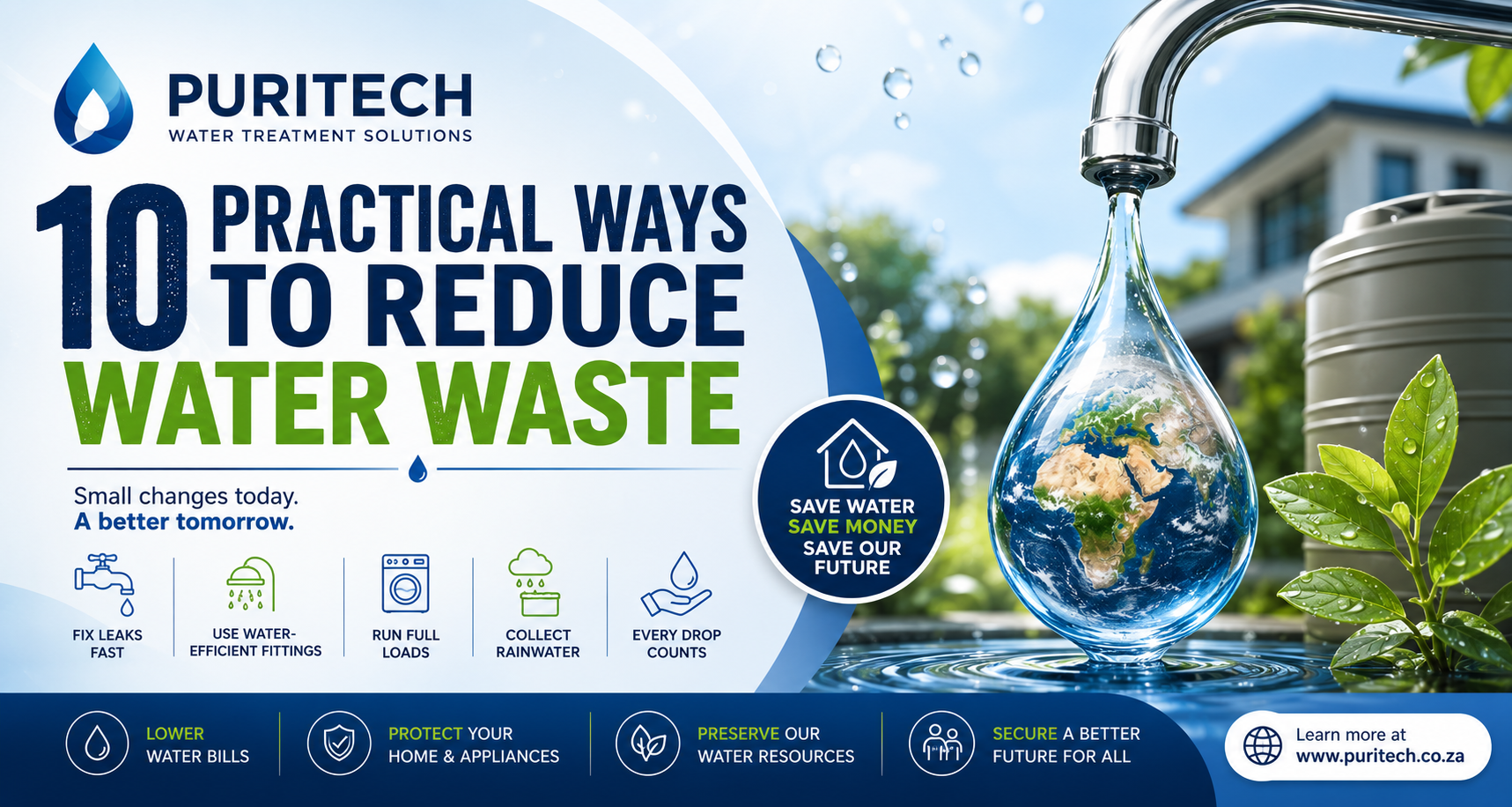
Water Waste: 10 Practical Ways to Reduce Water Waste at Home
Reducing water waste has become increasingly important for South African homeowners. With growing pressure on municipal water supplies, rising utility costs and periodic water restrictions, every litre saved makes a difference.
Fortunately, reducing water waste doesn’t always require expensive renovations. Small changes in daily habits, combined with a few smart upgrades, can significantly lower water consumption while helping you save money and protect one of our most valuable natural resources.
Here are ten practical ways to reduce water waste at home.
1. Repair Leaks Immediately
A dripping tap or leaking pipe may seem insignificant, but even a small leak can waste hundreds of litres of water over time.
Inspect your home regularly for:
- Dripping taps
- Leaking toilets
- Pipe leaks
- Outdoor hose leaks
- Faulty irrigation systems
Fixing leaks quickly is one of the easiest ways to reduce water waste.
2. Install Water-Efficient Fixtures
Modern plumbing fixtures are designed to use less water without sacrificing performance.
Consider installing:
- Low-flow showerheads
- Water-saving taps
- Dual-flush toilets
- Water-efficient washing machines
- Efficient dishwashers
These upgrades can reduce household water consumption every day.
3. Turn Off Taps When They’re Not Needed
Simple habits make a big difference.
Turn off the tap while:
- Brushing your teeth
- Shaving
- Washing dishes
- Scrubbing vegetables
Although each action saves only a small amount of water, the total savings add up over a year.
4. Use Full Loads in Appliances
Washing machines and dishwashers use nearly the same amount of water regardless of how full they are.
Whenever possible:
- Wait until the machine is full.
- Select eco-friendly programmes.
- Follow the manufacturer’s recommendations.
This improves water efficiency while reducing electricity consumption.
5. Collect Rainwater
Rainwater harvesting is an effective way to reduce dependence on municipal water.
Collected rainwater can be used for:
- Garden irrigation
- Washing vehicles
- Cleaning outdoor areas
- Toilet flushing (where appropriate)
- Other non-potable household uses
When combined with suitable treatment, rainwater can become an even more valuable resource.
6. Water Your Garden Wisely
Outdoor watering accounts for a significant portion of household water use.
To reduce water waste:
- Water early in the morning or late in the afternoon.
- Avoid watering during windy conditions.
- Apply mulch to retain soil moisture.
- Choose drought-tolerant plants where possible.
These simple changes help gardens thrive while using less water.
7. Monitor Your Water Usage
Many homeowners only notice high water consumption when they receive their monthly bill.
Instead:
- Read your water meter regularly.
- Compare monthly usage.
- Investigate unexpected increases.
- Look for hidden leaks.
Monitoring consumption allows you to identify problems before they become expensive.
8. Protect Your Plumbing From Scale Build-Up
Hard water can reduce the efficiency of plumbing and appliances by causing mineral deposits to accumulate over time.
Appropriate water treatment helps:
- Improve appliance performance.
- Reduce maintenance.
- Extend equipment lifespan.
- Improve overall water efficiency.
Healthy plumbing contributes to lower long-term water waste.
9. Store Water for Emergencies
Municipal interruptions can occur unexpectedly.
Installing a water storage system allows you to:
- Maintain access to water.
- Reduce disruption during outages.
- Collect rainwater more effectively.
- Improve household water security.
When paired with appropriate filtration, stored water can become a reliable backup supply.
10. Treat Water Before It Becomes a Problem
Poor water quality can shorten the lifespan of plumbing, pumps, and household appliances.
Professional water treatment helps improve system efficiency while protecting your home’s water infrastructure.
Combined with regular maintenance, the right treatment solution reduces unnecessary repairs and supports long-term water conservation.
More Simple Ways to Reduce Water Waste
Reducing water waste doesn’t stop with fixing leaks and installing efficient fixtures. Small adjustments to your daily routine can make a noticeable difference over time.
Here are a few additional habits worth adopting:
- Wash your car using a bucket instead of a running hose.
- Sweep driveways and patios instead of hosing them down.
- Defrost frozen food naturally rather than using running water.
- Keep a jug of drinking water in the fridge instead of letting the tap run until it becomes cold.
- Reuse suitable greywater for garden irrigation where local regulations allow.
Although each change may seem minor, the combined savings can be significant throughout the year.
Common Myths About Water Waste
Many homeowners unknowingly waste water because of common misconceptions.
Myth 1: A Small Leak Doesn’t Matter
Even a slow drip can waste hundreds or even thousands of litres over time. Fixing small leaks promptly prevents unnecessary water waste and helps keep your water bill under control.
Myth 2: Water-Efficient Fixtures Have Poor Performance
Modern water-saving fixtures are designed to maintain good pressure while using less water. In many cases, homeowners notice little or no difference in performance.
Myth 3: Only Large Households Need to Save Water
Every household contributes to overall water demand. Whether you live alone or have a large family, reducing water waste benefits both your finances and South Africa’s water resources.
Myth 4: Clean Water Is Unlimited
South Africa is one of the world’s water-scarce countries. As the population grows and infrastructure ages, responsible water use becomes increasingly important.
Why Every Litre Counts
Saving water is about more than lowering your monthly bill.
Reducing water waste also helps:
- Protect municipal water supplies.
- Reduce pressure on ageing infrastructure.
- Lower household utility costs.
- Support environmental sustainability.
- Improve long-term water security.
When many households make small changes, the combined impact can be substantial.
Frequently Asked Questions
How can I reduce water waste without spending a lot of money?
Start by repairing leaks, turning off taps when they’re not in use, running full loads in appliances and monitoring your water meter regularly. These simple changes cost very little but can deliver meaningful savings.
Does a water treatment system reduce water waste?
A properly designed water treatment system can improve efficiency by protecting plumbing and appliances from scale and sediment build-up. It also helps equipment perform as intended, reducing unnecessary maintenance and extending its lifespan.
Is rainwater harvesting worth considering?
Yes. Rainwater harvesting can reduce dependence on municipal water for suitable non-potable applications such as irrigation, cleaning and toilet flushing. When combined with appropriate treatment, it can also provide a reliable backup water source.
Why should I monitor my water meter?
Checking your water meter regularly helps identify hidden leaks and unexpected increases in consumption before they become expensive problems.
Conclusion
Reducing water waste is one of the simplest and most effective ways to protect your household budget while supporting South Africa’s precious water resources. From repairing leaks and installing efficient fixtures to collecting rainwater and maintaining your plumbing, every improvement contributes to better water efficiency.
The biggest savings often come from combining good daily habits with smart water management solutions. Regular maintenance, professional water treatment and responsible water use not only reduce waste but also help protect your plumbing, appliances and long-term investment.
At Puritech, we’re committed to helping homeowners and businesses make the most of every litre. Whether you need advice on water treatment, storage solutions or improving water efficiency, our team can recommend practical solutions tailored to your specific needs.